Transport and Roads
Projects That Taught the Industry
What landmark Australian transport and water projects changed about delivery models, risk sharing and the consulting firms behind them.
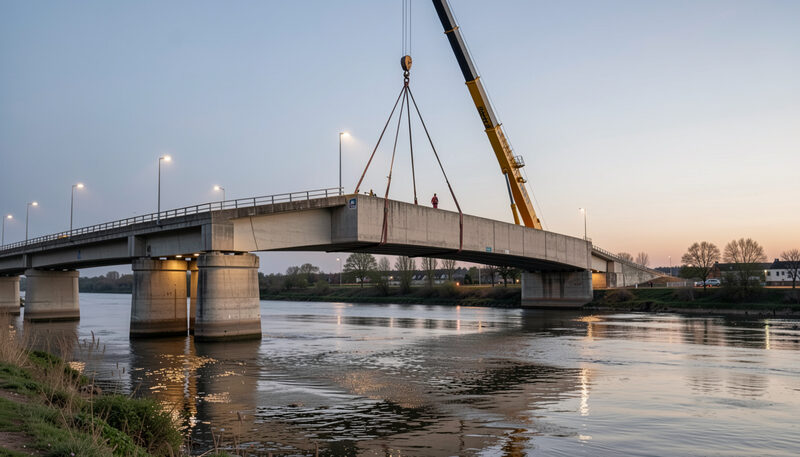
Projects as the industry's teachers
Every mature engineering market has a short list of projects that changed how the next generation was delivered. In Australia the lessons came from tunnels that flooded, freeways that filled faster than forecast, desalination plants built against drought deadlines, and alliances that turned adversarial contracts into shared teams. This page traces the patterns rather than any single firm's record: the address on which it sits once carried a consulting company's project list, and the subject it covered, how landmark projects teach the industry, is the one answered here.
The tunnel era rewrote risk allocation
Australia's city tunnels of the 2000s, in Sydney and Brisbane especially, tested the limits of transferring risk to contractors and investors. Projects that handed ground risk to a consortium without adequate site investigation produced claims, disputes and in some cases financial collapse of the vehicle that built them. The public lesson was blunt: a risk priced by a bidder who cannot see the geology is a risk priced as a gamble, and the cheapest tender can be the most expensive outcome.
The response across the industry was more geotechnical work earlier, government-held baseline reports that shared ground data with all bidders, and a wider use of collaborative contract forms on complex underground jobs.
Desalination taught deadline engineering
The Millennium Drought pushed several states into building desalination plants on schedules set by water security rather than construction logic. Victoria's plant at Wonthaggi, one of the largest capital projects in the state's history, was delivered through a public-private partnership under deadline pressure; Sydney, Perth, the Gold Coast and Adelaide each took different procurement paths. The collective lesson was that deadline-driven megaprojects can be delivered, but only when the client keeps a strong technical team inside the tent and resists the temptation to transfer every risk it cannot itself manage.
The drought context that produced those decisions is described in the water planning guide.
Alliances turned enemies into partners
The alliance model, developed in Australia in the 1990s and refined through water and road programs, replaced the claim-driven culture with a shared risk pool: owner and contractors form one team, share an agreed target cost, and split overruns or savings under a pain-share and gain-share formula. Programs such as Queensland's water grid and metropolitan road upgrades showed the model works when the scope is uncertain and the schedule is tight, because nobody in the tent profits from a dispute.
Alliancing also taught its limits. It costs more to establish, suits only complex work, and demands an owner capable of acting as a genuine partner rather than a distant client. The skills that make that possible sit inside the service lines described in what a consulting firm does.
Public-private partnerships taught allocation, not ideology
Australia adopted privately financed infrastructure earlier than most countries, and its toll roads and tunnels produced a full generation of lessons. The successes showed what the model does well: a defined concession, transferred construction and patronage risk, and private capital discipline on the program. The failures showed its edge: traffic forecasts that proved optimistic bankrupted the investors behind several early toll projects, and governments learned that demand risk placed with bidders who wanted the deal too much was risk that returned as bailouts and renegotiations.
The refined lesson now sits in the market's shared understanding: transfer construction and performance risk readily, share or retain demand risk honestly, and publish the contract summaries so the next project starts from what the last one cost.
Road programs taught repeatability
Pacific Highway upgrades, metropolitan freeway widenings and the level crossing removals described in the crossing guide demonstrated the value of a pipeline. A program that guarantees years of work lets contractors invest in people, precast yards and digital delivery systems that a single project could never justify. The unit prices fall and the quality rises because the same teams meet the same problems repeatedly.
Megaprojects taught governance
The largest projects of the current era, metro tunnels in Sydney and Melbourne and motorway programs in every capital, added a governance lesson to the technical ones. Projects with a dedicated delivery authority, a single accountable director-general or CEO, and stable ministerial sponsorship kept their shape through years of disruption. Projects governed through shifting departmental arrangements drifted on scope and cost. The industry now treats the governance model as a design decision as real as the alignment, and the best business cases name the delivery entity before they name the contractor.
What the pattern says
Across decades the lessons converge. Data shared early beats data discovered late. Risk belongs with whoever can manage it, not whoever prices it lowest. Pipelines beat one-off projects. And the client that stays technically literate, rather than contracting away its own understanding, consistently gets better outcomes. Those principles now sit inside the guidance of state infrastructure bodies and shape how the next generation of projects is bought.
For a reader following a current proposal, the historical pattern offers a test: does the business case share ground data, does the contract place risk where it can be managed, and does the program offer the supply chain a pipeline? The answer predicts the result better than the opening-day render does. The lifecycle those projects move through is mapped stage by stage in how a road project gets built.