Cities and Communities
Cities and Communities
The documents and decisions that shape new suburbs: precinct structure plans, social infrastructure and development work abroad.
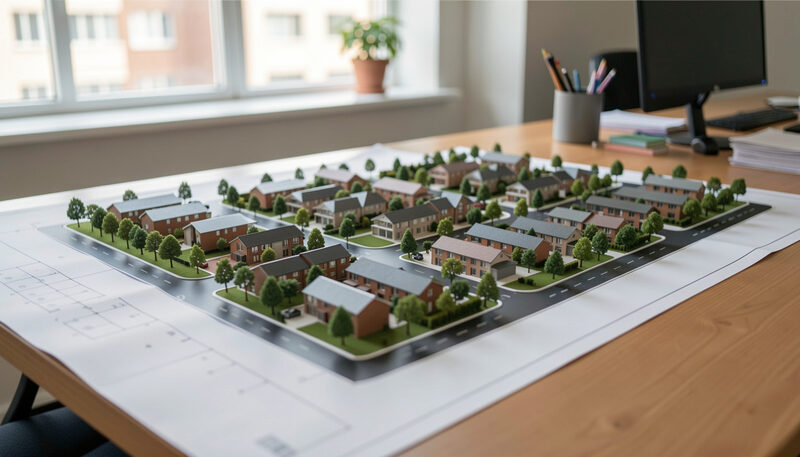
Australian cities grow at their edges and densify in their middle rings, and both movements are governed by documents most residents never read: structure plans, precinct plans, development contribution schemes and social infrastructure strategies. This section explains the planning instruments that decide what a new suburb will look like before it exists, and follows the same disciplines into the development work Australian firms deliver across Asia and the Pacific.
The suburb decided on paper
Before a single road is built in a growth-area precinct, a plan has already fixed its skeleton. The precinct structure plan, standard in Victoria and echoed under other names elsewhere, maps the arterial roads, the local centres, the school sites, the park network and the drainage corridors that every later subdivision must conform to. The guide to precinct structure plans explains what the document fixes, how to read its maps and where a resident can still comment before it is locked in.
Services arrive later than streets
The pattern in every growth corridor is the same: houses are occupied years before the library, the health service or the community centre opens. Social infrastructure planning is the discipline that tries to close that gap, by setting benchmarks for when each service should arrive and identifying who funds it. It rarely fully succeeds, because houses are funded by developers and services by governments working to different budgets and different clocks.
The guide to planning social infrastructure sets out the benchmarks planners use, the funding mechanisms that pay for community facilities, and why timing gaps are structural rather than accidental.
The same skills, further from home
Australian engineering and planning consultancies have delivered infrastructure and institution-building projects across Asia and the Pacific for decades, funded by the Australian aid program, multilateral banks and foreign governments. The work ranges from water systems and rural roads to helping partner governments run their own project pipelines.
The overview of Australian engineers in international development explains how that market is funded, how projects are procured and safeguarded, and what distinguishes it from domestic consulting work.
The renewal half of the story
Growth-area planning gets the attention, but the middle-ring suburbs carry a parallel transformation: older industrial land returning to housing, activity centres being rezoned for density, and precincts around new stations being replanned entirely. The instruments differ, but the logic is the same as at the fringe. A plan fixes the frame, contributions and state funding pace the delivery, and the community experiences the result years after the decisions were made.
Reading either kind of precinct rewards the same habit: find the plan, read its maps in the right order, and check which of its promises are funded commitments and which are intent.
Where this section connects
Contaminated land returned to use becomes the land precinct plans are drawn over, which is why the remediation guide sits in Water and Environment. The physical works that precinct plans trigger, the roads and crossings and utilities, follow the pipeline described in Transport and Roads. And the planners, engineers and project managers who write these documents work inside the firms covered in The Consulting Profession.
Each guide names the public documents a reader can check: planning scheme amendments on state planning portals, exhibited structure plans on growth authority websites, development contribution plans in council agendas, and aid program evaluations on the department's public library.
Cities and Communities
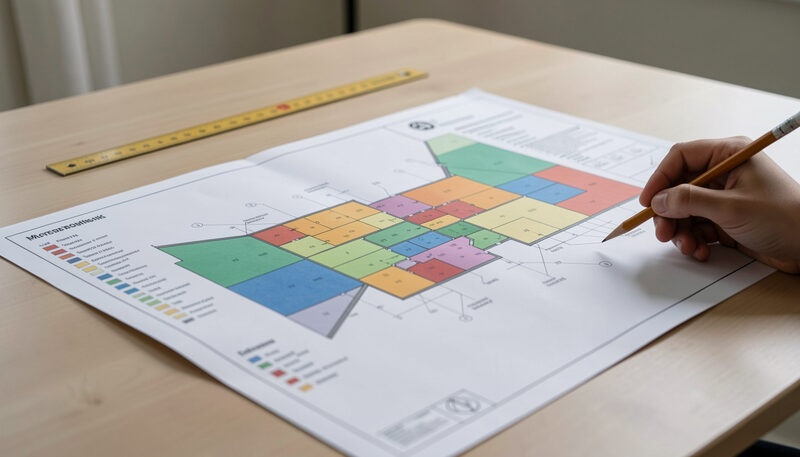
Precinct Structure Plans Explained
What a precinct structure plan decides before a suburb exists: roads, lots, parks, drainage, centres and how to read one.
The map that fixes a suburb before the first lot sells.

Cities and Communities
Planning Social Infrastructure
How planners decide where schools, libraries, health services and community centres go in a new suburb, and when they arrive.
Benchmarks, contribution plans and why services lag the houses.
Cities and Communities
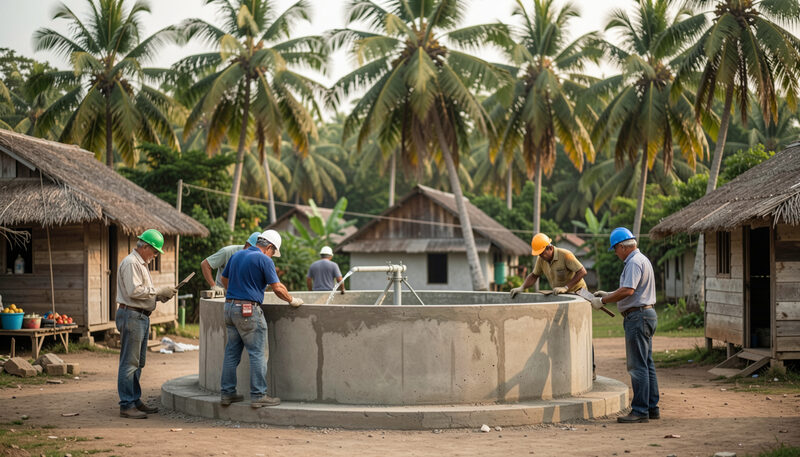
Engineers in Development Work
How Australian consulting teams deliver water, roads and institution-building projects across Asia and the Pacific, and who funds them.
Aid-funded delivery, safeguards and the Pacific niche.