Cities and Communities
Planning Social Infrastructure
How planners decide where schools, libraries, health services and community centres go in a new suburb, and when they arrive.
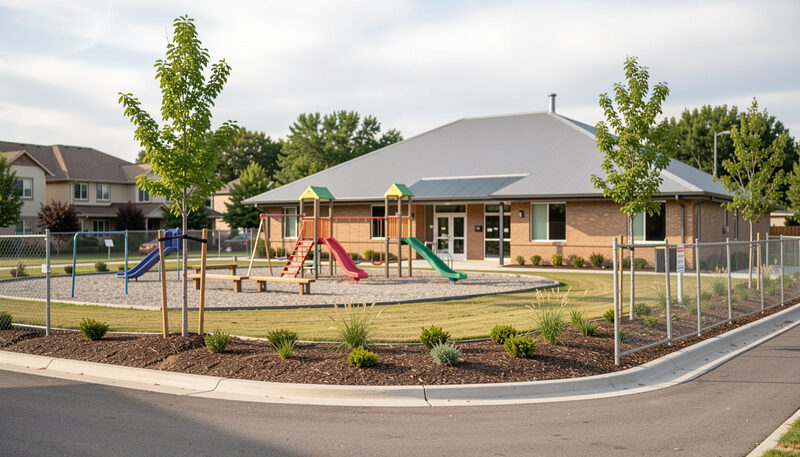
Every new Australian suburb runs the same experiment: tens of thousands of residents arrive before the services do. Schools, health facilities, libraries, community centres and sports grounds are all planned on paper before the first house, yet they reliably open years after the families who need them. Social infrastructure planning is the discipline that tries to manage that gap, and understanding why it keeps failing explains a great deal about how growth suburbs actually work.
What counts as social infrastructure
The category covers the facilities that make a suburb function as a community rather than a dormitory: government and non-government schools, maternal and child health centres, kindergartens, libraries, community halls, neighbourhood houses, health and allied services, sports reserves with pavilions, and the emergency services that scale with population. Planning frameworks divide them by catchment: some facilities serve a neighbourhood of ten thousand, others a district of sixty thousand or more.
The distinction matters because it decides who pays. Neighbourhood-level facilities are usually funded through development contributions, which means the developers of the precinct pay for them in advance. District-level facilities, the big sports complexes, the hospitals, the TAFE campuses, sit beyond what developer levies can fund and wait on state budget cycles.
The benchmarks planners work to
Growth area planning uses benchmark ratios: a government primary school site for roughly every set number of lots, a community centre per neighbourhood, active open space within a defined distance of most homes. These ratios are set out in the precinct planning guidelines and converted into the land reservations that appear on the structure plan map described in the guide to precinct structure plans.
Benchmarks describe where facilities should be, not when they open. The plan reserves the school site; it does not fund the school building. That gap between reservation and delivery is where most resident frustration lives, and it is structural rather than accidental.
Why the gap keeps happening
Three clocks run at different speeds. Developers can deliver houses at market pace, sometimes a thousand lots a year in a hot corridor. Development contributions arrive with the lots but fund only the neighbourhood-level list. State budgets fund schools, health and district facilities through annual allocation processes that respond to demonstrated need, which by definition exists only after people have moved in.
The result is a predictable lag of three to eight years between first occupation and full local service coverage in fast-growing precincts. The mitigation strategies are known and used: interim facilities in leased or modular buildings, co-locating services on school sites, sequencing contributions toward early facilities, and service reviews triggered by population thresholds rather than calendar dates. None eliminates the lag; they compress it.
Who delivers what
The delivery map splits several ways. Councils build and run libraries, community centres and local sports facilities from contributions and rate revenue. State government departments deliver schools, health services and emergency services. Non-government school systems decide their own timing based on parish or network demand. Not-for-profit providers operate neighbourhood houses and early years services, often in council-owned buildings.
This fragmentation is why social infrastructure planning exists as a discipline: someone has to hold the whole picture across a dozen delivery agencies, each with its own budget cycle, its own trigger thresholds and its own political pressures. In growth areas that role sits with state growth authorities and council planning teams working from the same structure plan.
Co-location as the quiet fix
The strongest recent shift in the field is co-location: putting services on shared sites rather than scattering them. A school that shares its oval with community sport, a library built over a maternal health centre, a community hub that houses kindergarten, neighbourhood house and meeting rooms under one roof each stretch the same contributions further and put services where people already go. The approach requires agencies to surrender a little autonomy, which is why it spreads slowly despite the arithmetic favouring it.
What residents can actually use
The documents are more actionable than they look. The development contributions plan shows which facilities are already funded and in what order they should arrive, because it lists every item with a trigger and a cost. Council community infrastructure plans show the pipeline beyond the funded list. Comparing those documents against what has actually been delivered is the most honest scorecard a growth-area resident can read.
When a promised facility runs late, the contributions plan is also the accountability instrument: it names the responsible agency and the trigger that should have started delivery. Submissions at plan reviews, and questions at council budget consultations, move further when they cite the document rather than the grievance.
The wider frame
Social infrastructure sits inside the same growth machine as the roads and crossings covered in Transport and Roads and competes for the same budget attention. The professionals who write the plans, model the demand and negotiate the contributions work inside the consulting and public sector teams described in The Consulting Profession. The suburb on paper and the suburb on the ground are separated less by drawing than by the funding clocks that run between them.