Transport and Roads
Level Crossing Removals Explained
Why states remove level crossings, how rail trenches, rail bridges and road underpasses are chosen, and what changes for suburbs.
Why crossings came to dominate the agenda
A level crossing is the cheapest way to build a railway and the most expensive way to run one. Boom gates stop road traffic for minutes at a time, and on busy lines the gates are down for most of the peak. Crossings concentrate crash risk, divide suburbs for pedestrians and cyclists, and cap the number of trains a line can carry, because each additional service means more down time for the road.
Victoria's Level Crossing Removal Project, launched in 2015 with an initial list of fifty crossings and later extended, turned removal into a rolling program rather than a series of one-off projects. Other states have run smaller programs. The scale changed the industry's economics: instead of designing each crossing removal alone, teams developed repeatable designs, standard details and supply chains that improve with each site.
The three ways to separate road and rail
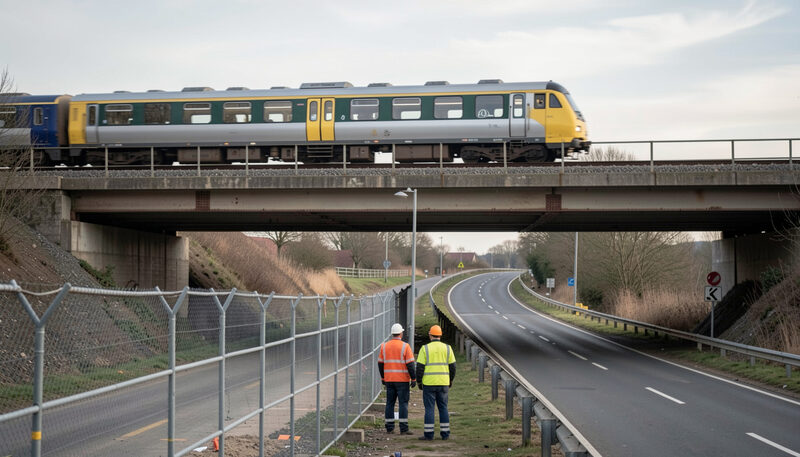
Every removal chooses between three basic geometries, and each solves a different problem. A rail trench drops the line below the road, leaving the surface free for streets, paths or open space. Trenches cost more and take longer, but they preserve local access and are often preferred through dense shopping strips. A rail bridge lifts the line over the road. Bridges build faster and cheaper, and modern designs use the space underneath for parks, parking and station precincts, though early elevated projects attracted criticism for overshadowing and wind effects.
The third option moves the road instead: a road underpass or overpass leaves the railway at grade and lowers or raises the traffic. It suits sites where rail geometry is constrained, such as near creek lines or tight curves, but it simply relocates the visual barrier rather than removing it.
What actually drives the choice
Geometry is decided by constraints the public rarely sees. Ground conditions rule options in or out: a trench through soft, waterlogged soil costs multiples of the same trench through firm ground. Underground utilities, drainage paths and flood levels each veto certain depths. Proximity to a station matters, because a lowered line can serve a rebuilt station below street level while an elevated line forces a trestle structure.
Heritage buildings, mature trees and community facilities along the corridor shape the solution too, and consultation processes now publish the comparison of options rather than announcing a single answer. The approvals context for these decisions sits inside the framework described in the environmental approvals guide.
Occupations: the hidden cost of rail work
Building around a live railway means working in occupations: planned shutdowns when the line closes and crews work continuously. A major removal typically needs several occupations of days or weeks, scheduled around events and peak periods, with substitute buses carrying passengers. The logistics of an occupation, hundreds of workers and machines on a critical path measured in hours, are among the most demanding exercises in Australian construction.
This is why removals are bundled. A single occupation can advance several sites along a line, and programs are sequenced to share possessions, camps and concrete plants across projects.
The elevated rail debate
No removal choice generated more argument than elevated rail. When Melbourne's program proposed long sections of rail bridge through the south-eastern suburbs, the term sky rail became a protest slogan, and the political fight obscured an engineering trade-off worth understanding on its merits. Elevation is faster and cheaper to build, releases land beneath the line, and avoids the ground and flood constraints that make trenches expensive. Its costs are visual and acoustic, and modern designs mitigate both with slender structures, sound barriers and open space under the deck.
The durable lesson was about consultation, not concrete. Communities shown the real comparison early, with ground conditions and costs on the table, argued about the trade-off. Communities presented a decided answer argued about the process. Subsequent programs shifted toward publishing option comparisons before preferences, which is the transparency the corridor debates of the 2010s taught.
What changes for the suburb
A completed removal changes more than the commute. Streets rejoin across the corridor, property values respond, and the land released by a trench or under an elevated line becomes parks, paths and station precincts. The same project also redraws the catchments described in precinct structure plans, because a station freed from a hostile crossing suddenly supports the density and activity its zone always promised.
The lasting lesson of the removal programs is institutional: a government that commits to a pipeline gets better pricing, faster delivery and a workforce that stays in the industry between projects. The economics of that continuity are part of the broader story told in the projects that taught the industry.
What the program costs, and how it is judged
Removal programs are among the most expensive items on any state infrastructure list, priced per crossing in the hundreds of millions once station rebuilds, occupations and urban realm works are counted. Critics argue the same money buys more train frequency elsewhere; defenders answer that the road congestion, crash and land benefits never appear in a rail-only appraisal. The honest reading is that a removal program is a city-building decision wearing a transport budget: it is bought for what it does to the suburbs as much as for what it does to the timetable.
Reading a removal announcement
Announcements list a crossing and a preferred design, but the detail lives in the published comparison: the ground conditions, the utility conflicts, the station works and the occupation plan. Residents who read those documents can tell a finished answer from an early preference, and can see which questions the project has not yet resolved.