Water and Environment
Cleaning Contaminated Land
How former gasworks and industrial land is tested, remediated and audited in Australia before homes and parks are built on it.
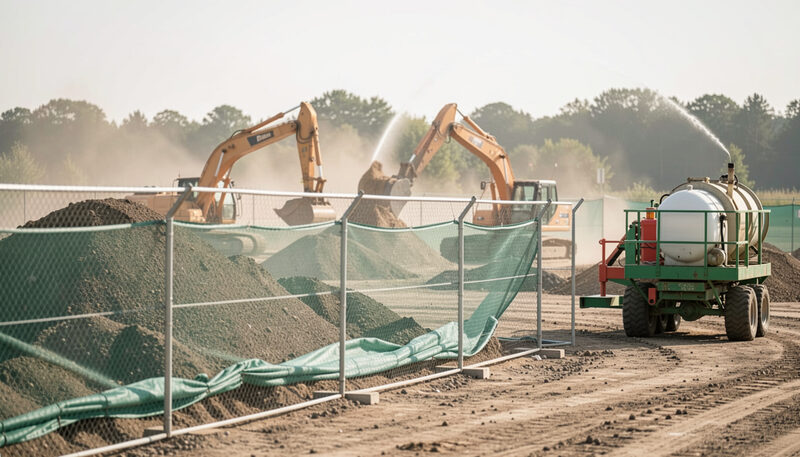
Australia's industrial past is stored in its suburbs. Gasworks, rail yards, fuel depots, tanneries, smelters and factories occupied land that is now wanted for homes, schools and parks, and the soil and groundwater underneath carry what those industries left behind. Returning that land to use is a defined technical process with its own legislation, its own professionals and its own public registers.
What the site investigation establishes
Remediation begins with a question, not a machine: what is here, where is it, and where could it go? A preliminary site investigation reconstructs the site's history from aerial photographs, council records, trade directories and title searches, because the map of past uses predicts where contamination is likely before a single borehole is drilled. A gasworks leaves different signatures from a fuel depot, and the history narrows the search.
The detailed investigation that follows samples soil and groundwater on a grid informed by that history. Laboratories test for the contaminants associated with the known uses: hydrocarbons around fuel storage, heavy metals near smelters and tanneries, tar compounds and cyanides at gasworks, asbestos in demolition fill almost everywhere. The result is a conceptual site model: a three-dimensional picture of what is present, at what concentration, and which pathways could carry it to people, groundwater or neighbouring land.
Risk decides the endpoint
Australian remediation is risk-based, and the framework is the national environment protection measure for site contamination, the NEPM, which each state administers in its own way. The central idea is that land does not have to be returned to pristine condition; it has to be made safe for its intended use. A site destined for a warehouse slab carries a different cleanup target than the same soil under a childcare centre, because the exposure pathways differ.
That logic shapes every decision that follows. Contamination that cannot reach anyone may be contained and managed rather than removed. Contamination under a future garden must be treated or taken away. The risk assessment converts chemistry into a remediation target, and the target into a scope of work.
The options on the table
Excavation and disposal to licensed landfill remains common because it is fast and certain, but it is the option of last resort where volumes are large. Alternatives treat contamination in place or on site: soil vapour extraction draws volatile compounds from the ground, bioremediation uses microorganisms to break down hydrocarbons, stabilisation binds contaminants into less mobile forms, and pump-and-treat systems extract and clean contaminated groundwater over years.
Many projects blend methods. A gasworks site might see hotspot excavation where tar concentrations are extreme, containment cells where material can be safely capped, and long-term groundwater treatment along the boundary. The choice is driven less by technology than by program, cost and what the finished site is meant to become.
The audit that makes it legal
The distinctive Australian mechanism is the independent environmental audit. In Victoria and New South Wales, statutory environmental auditors are appointed under legislation to review the investigation and remediation work and issue a statement about the site's suitability for its proposed use. The auditor is independent of the party doing the work, reports to the environmental regulator, and their audit statement is what planning authorities and buyers rely on.
An audit can conclude that land is suitable for a use, suitable with conditions such as maintaining a cap or ongoing groundwater monitoring, or not yet suitable. The conditions become enforceable obligations that run with the land, recorded on title or in planning instruments. A buyer reading a site with a contamination history asks for the audit statement before anything else.
The contaminants that shape design
Different legacies dictate different engineering. Gasworks tars are dense, persistent and found at depth, which is why former gasworks sites produce some of the largest remediation programs in the country. PFAS compounds from firefighting foams move readily through groundwater and resist nearly every treatment, which has made them the emerging liability of the last decade at airports, defence sites and industrial estates. Asbestos in fill is rarely a deep problem but a pervasive one, shaping how the surface can be landscaped and how future owners may dig.
The contaminant profile feeds back into land use decisions. A site whose groundwater plume cannot be fully treated may suit industrial reuse with managed controls but not housing with gardens, and the audit statement will say exactly that.
Why remediation drives urban renewal programs
On former industrial land, remediation is frequently the critical path. Demolition and construction cannot start until the ground is made safe, discovery of unexpected contamination can resequence whole stages, and the audit has to conclude before titles issue and settlements occur. Developers and the consultancies they hire treat remediation strategy as program strategy, a connection explored further in the planning of new precincts.
The costs are real and occasionally enormous, which is why site history due diligence happens before land is bought, and why the environmental consulting teams that run these programs are among the most specialised in the profession described at what a consulting firm does.
Where the public record lives
State registers list audited sites and the statements issued for them. Contaminated land notifications sit with state environmental protection authorities, planning overlays flag affected land in council schemes, and audit reports on major urban renewal sites are often published with the project's planning documentation. A reader researching a site near them can usually establish its audit status, and often its contamination history, without leaving the public record.